Pre-order ‘Long Road to Nowhere: The Lost Years of Richard Trevithick (Part One)’ now, HERE.
For the second time today I left Uyuni, only this time I was heading all the way to Potosi instead of jumping off outside Pulacayo. The bus trundled over cobblestones and out of the town with all the anticipation of a plane taxiing for take-off. The anticipation endured for four hours and only when the bus arrived into the old terminal in Potosi did I realise that was top speed. Even when the roads in Bolivia are actually made out of road, vehicles can rarely gain any speed because they are at the mercy of geography and the buses themselves are just like me: jittery and twitchy, ready to shake themselves loose when they hit a bump in the road.
Almost every road in Bolivia has a series of slaloms throughout and an immense number of hairpin bends that snake up, down and all around. If you look at the gap between Uyuni and Potosi on a map, it’s a relatively short distance. In reality, it’s a 4 hour drive of twists and turns up to an altitude of 4000m. Every passenger is also at the mercy of the driver who stops whenever he wants: to have a piss, to grab a snack, or just to have a chat with someone he spotted walking near the road. By the time I got to Potosi it was dark and I had to scale an immense hill from the new town up to the old quarter, a feat I completed with surprising ease, so I went for some fried chicken. If you ever visit Bolivia be warned – there is fried chicken everywhere, all served with stale chips and/or rice that’s been kept half warm in an incubator.
Potosi
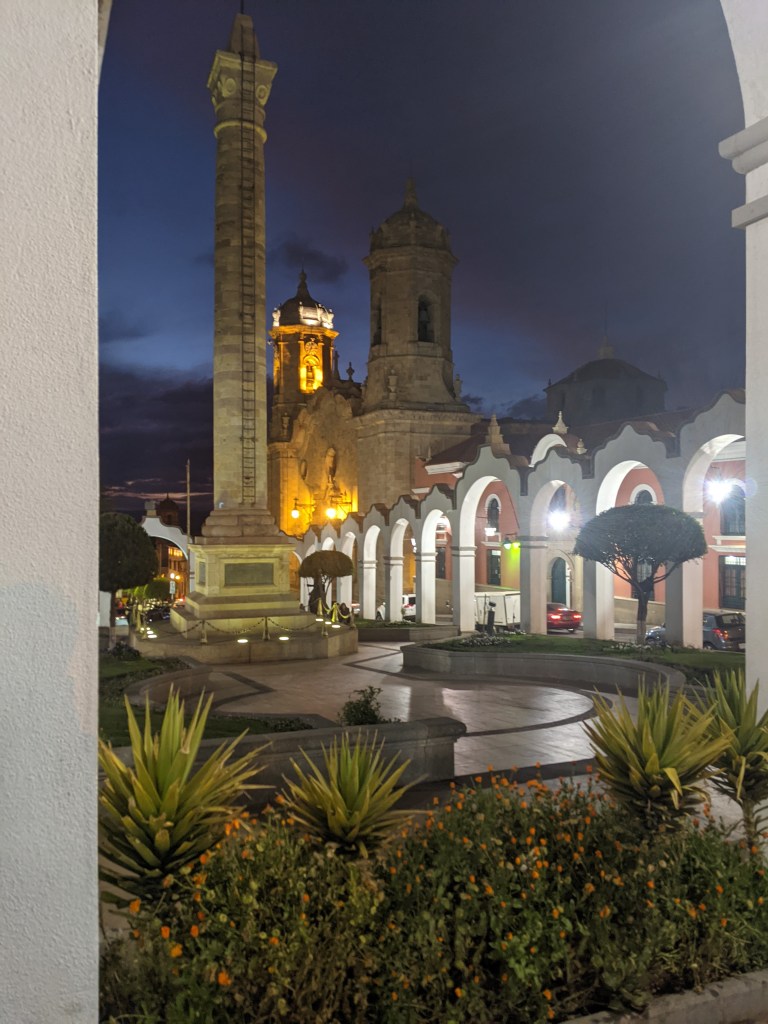
Potosi was once, during it’s heyday, a place larger than some European capital cities. The city is built in the shadow of a mountain the Spanish named Cerro Rico (Rich Hill) and rich indeed it is. During the Reconquista, Cerro Rico and the city of Potosi were home to immense wealth, so much wealth in fact, people began to think it was an infinite source of riches – El Dorado perhaps. From 1545 onwards, Cerro Rico almost single-handedly funded the entire Spanish empire; millions of silver coins were minted and used to fight wars all over the world, as well the rearing of pigs to force feed to the remaining Jews and Muslims in Spain until they converted to Christianity, communities that were killed anyway for not being truly ‘Spanish.’
Men came from all over the world to Potosi in search of their own personal fortune, many of whom fell foul of the city’s toxic trinity: greed, altitude sickness and mercury poisoning. Any one of these afflictions on their own were enough to break a man’s mind and spirit and perhaps even kill him. Put all three together and you had a recipe for disaster in a place filled with desperation and depravity. Men losing their minds, men wasting away, men dying all in the pursuit of wealth. As I said in my very first post on this blog, anywhere there’s a mine there’s someone Cornish, and I’m sure many a pard suffered the same fate at the hands of El Tio. Eventually the silver began to decline and the illusion of infinite wealth slowly shattered, driving men back to lower altitudes and other mines with the same insatiable greed.
Today, the silver is all but exhausted, yet up to 15,000 men still march their way into Cerro Rico everyday to scrape up what’s left: tiny traces of silver and other minerals like zinc. It is a desolate, Godless place. Maybe 8 million people died within the mine throughout the entire history of the mine. So many indigenous Andeans died there that the Spanish ran out of slaves to send down, forcing them to transport new slaves from Africa across the Atlantic. But these men were not built for the altitude, nor the conditions of the mine. What a horrible history it is.
Twisted Tourism
For the princely sum of 120 bolivianos (about £15) you can enter this mine for a few hours to see what it is like. It is a dark and twisted form of tourism, but it provides people with an income away from mining. Ex-miners become tour guides and they only have to spend a few hours down the mine instead of 12 or 16-hours in a shift. It sounds a bit better, but is it really?
One of the tour guides stuffs as many people as he can into a fridge sized car and then takes us up towards Cerro Rico, stopping first outside a non-descript door on a non-descript street, leading us into a bare room where all manner of rapes and murders used to happen. Once they painted over the blood stains and nail scratches, the room became a storage space for the overalls, boots, and helmets tourists must adorn before entering hell itself. There was one more stop before we went up to Cerro Rico: the miner’s market. Here we were supposed to buy the workers presents; presents meaning things helped them grit their teeth and see out another day. Fizzy drinks and coca leaves were the norm regardless of what time it was. If you arrived in the morning you could also buy dynamite and if it was a Friday, 96% alcohol and finger sized cigarettes with no filter were the order of the day. Our guide said the miners only drank and smoked on Friday, which is an impressive show of self-control – if I worked in that mine I’d drink everyday.
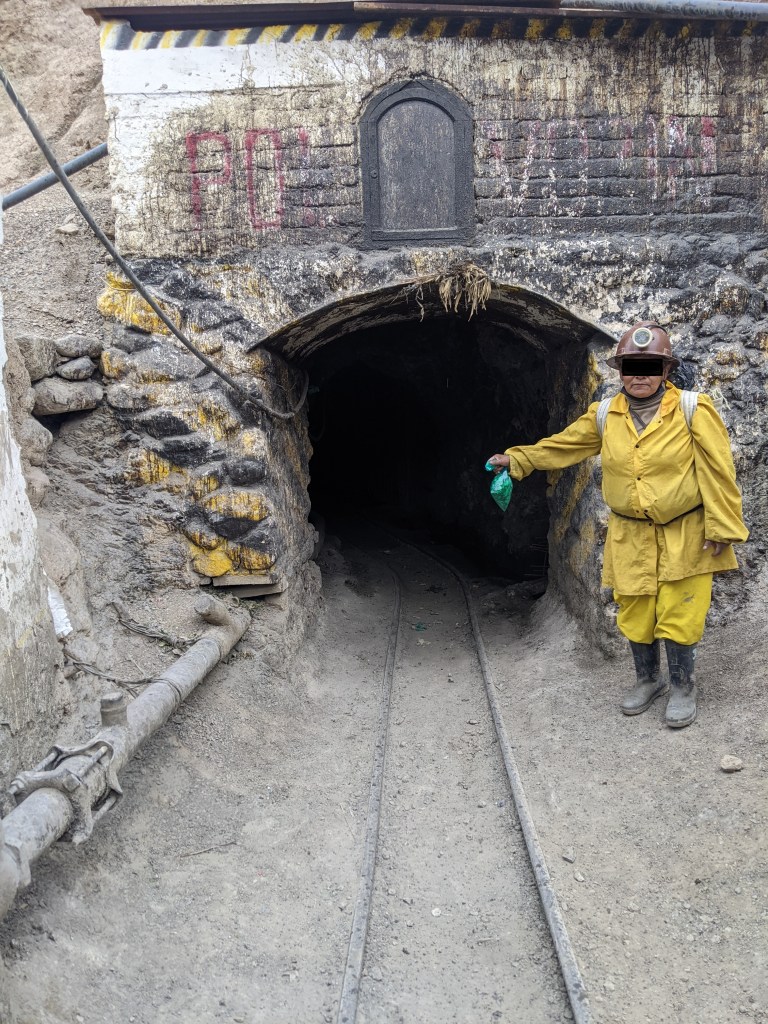
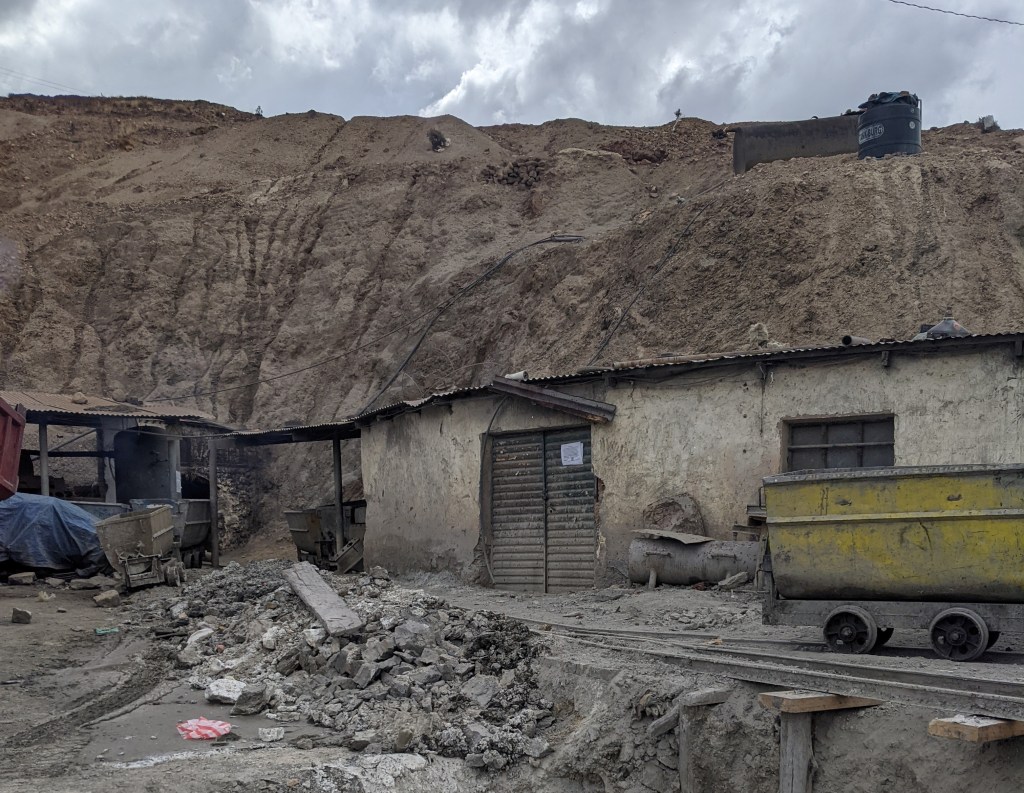
We were overdressed. Not even the miners had overalls, just a helmet, boots and an array of filthy clothes. We even had plastic bags over our socks for some reason, or condoms for the feet as our hilarious guide called them. We arrived at one of allegedly 500 different entrances to the mine and saw two exhausted miners pushing a hand cart out of the mine and dumping the contents on a pile next to the tracks. She told us each cart weighed two tonnes. It was already clear that very little had changed in the last 400 years, only the advent of dynamite and the drill made their lives any easier.
One thing would never change no matter how much technology progressed: an early and painful death. The life expectancy of a miner is at best 45, worse even than the poor life expectancy of Bolivia in general and their particular affliction is silicosis (lung rot) from their constant exposure to dusty mine shafts. This was a medieval scene, but this kind of mining is nothing short of archaic. The two miners emptied the cart and then trudged back into the mine with the now lighter cart in silence, a huge wad of coca in their cheeks.
Before the tour began in the early afternoon I was wandering around the old quarter of Potosi looking for somewhere to grab lunch until a huge procession blocked my way. A horribly uncoordinated marching band followed by a stream of dancers all bored stiff passed through the streets. Some looked on impressed and others like me just carried on walking through the street. If Bolivians walked any slower they’d be going backwards. I know most of them are hobbit sized and I walk too fast in any society but they really take the piss. Sleepwalking zombies roam the streets at a pace just short of glacial, heads buried into phones or unscrewed by a lifetime of trying to abuse an incredibly mild stimulant. If they walked up the main hill leading towards the old town at this pace they’d fall over. Maybe I’m just impatient; I tried to mirror the pace but after a few seconds I was overcome by rage and boredom and had the urge to start leapfrogging the smallest people I could see ahead of me.
I asked our guide about the procession on our way to the time and she told me today was the anniversary of the corporation taking hold of the mine. The word corporation may sound evil to many people but when the alternative is Spanish colonial enslavement and genocide suddenly it’s not so bad. The corporation is locally owned and theoretically all the miners in Potosi work for themselves, selling the mineral they extract every day, but pay heavy taxes on it all. Potosi might be one of the last true mining towns on the planet. Men are still engaged in filthy and damaging work but they are well respected for it, not least because they are free of Spanish rule and more recently of Chinese corporations trying to buy up the mine for their own shady means. The current isn’t the best, its just the least horrid. In the Spanish colonial times, 8 million people died at Cerro Rico and our guide told us that local populations were forced to work underground for months at a time – living, working and sleeping within the mine without ever coming back to the surface. The future prospect is Chinese rule, the return of mercury poisoning and a complete disregard for the few touches of health and safety that just about exist today.
Right next door to hell
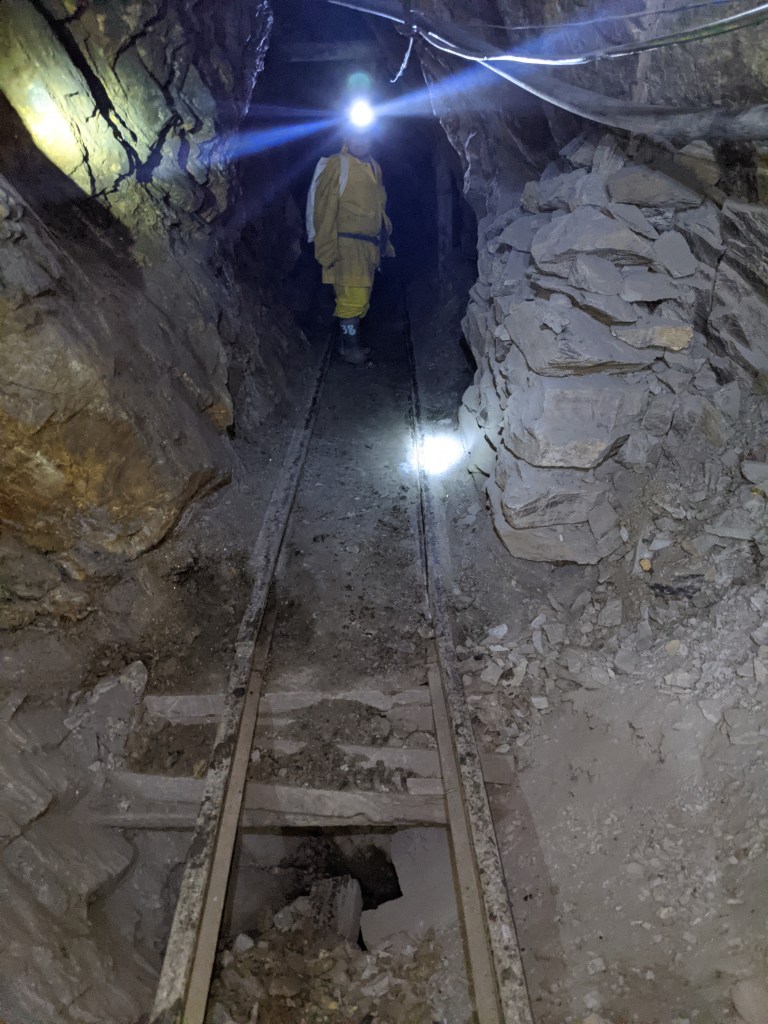
We finally entered the mine. I immediately had to crouch down, a position I held for the entire duration of the visit. I thought to myself, maybe this is why mining declined in Europe, everyone was too tall. The floor beneath the tracks was waterlogged and the walls all around us were pockmarked with dynamite holes, something the 16th century slaves could only dream of.
“How far in do we go?” someone called from behind me.
“1 or 2 kilometres,” the guide shouted back.
“Have you even gotten lost down here?” I asked.
She just laughed.
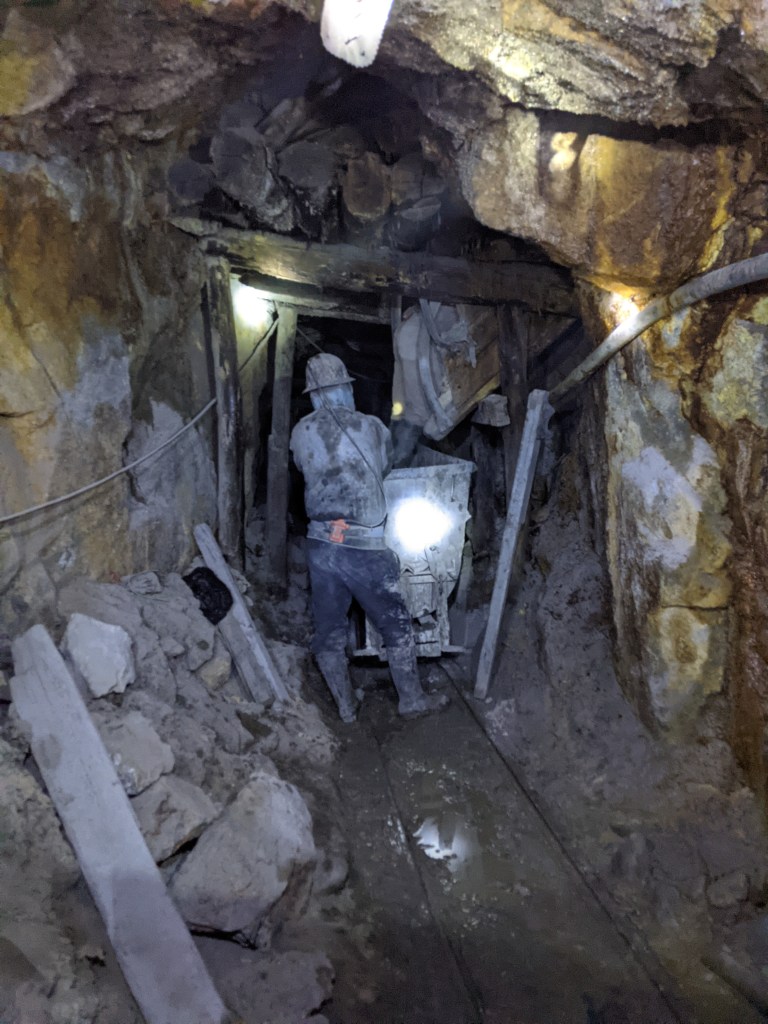
A rumble began in the distance and the flash of head torch signalled the oncoming hand cart. The guide hissed at us all to stick to the rock beside the tracks so as to not get run over. We were guests here. I couldn’t help but feel our curious presence here was a hindrance and an annoyance to the men. Once the cart had passed we set foot again, twisting and turning through a rabbit’s warren of tunnels, or Swiss cheese as our guide noted. A miner was slumped against a rock ahead of us. We stopped by him and he barely looked up. She greeted him enthusiastically and asked how he was. I thought it was a silly question.
“Alive and nothing more,” he replied bluntly.
He graciously accepted the first plastic bag of gifts and looked up for the first time at us all, our head torches blinding each other for a moment. He lowered his head once more. He was nearly finished for the day; he began at 3am this morning and when 3pm arrived he could finally leave this hellhole once more, only to return again tomorrow.
While our guide wasn’t a miner, she seemed destined to suffer the same fate. Every day she went down the mine as if she was a miner, greeting them all in turn with the bravado and confidence of someone three times her size. She told me she’d been doing tours for 28 years and even worked in the mine during the pandemic, one of the very few women who venture here. She told us 15,000 people were at work across all the various shafts but we’d seen no more than 30 during our visit. Despite the lack of 12 hour shifts, she coughed with the ferocity of a woman whose lungs were about to fail and no amount of coca could numb the fact that she is still exposed to the same life-shortening reality as the miners. This tiny and wise woman was hilarious, confident and boisterous, many traits she’d presumably learnt living in a man’s world for so long. I asked her as many questions as I could think of and she replied with honesty. However, there was one question I didn’t ask because it felt disrespectful. I think I already knew the answer though.
Do you enjoy this work?
That’s the soft-handed bourgeoisie liberal in me speaking. Even in Europe, a world away from Bolivia, everyone has to have a job. The privilege many people in Europe have is the choice to pick a job they won’t necessarily detest every day, nor one that actively shortens their life. The men in this mine presumably don’t have the luxury of choice and me wading into this world with silly questions like ‘do you enjoy your job’ or ‘why don’t you get a different one’ would be met with blunt replies like ‘I do this so me and my family can survive.’ That used to be the sole purpose of work, but in Europe we need things like satisfaction and fulfilment in our work because our lives are too easy. At least they garner respect, something so many jobs in Europe no longer do. In an ideal world no one should have to go down a mine like this but unfortunately the world isn’t ideal and for a very average Bolivian wage, thousands of men die in their 40s.
Inequality breeds resentment
I banged my head again it made me think about the reality of mining. I’ve been focusing on the stories of the Cornishmen who ventured to South America in search of riches up until now, but seeing Cerro Rico myself reminded me of the reality of mining. The reality of mining isn’t men coming from afar to manage the mine and returning home handsomely rich. The reality of mining is poor people engaging in back breaking labour for a tiny share of the profits and making the aforementioned men in charge rich. The rich men don’t get their hands dirty nor do they suffer from rotting lungs. Maybe if the miners at Pulacayo hadn’t had their energy drained by the mine they would have successfully murdered John Penberthy and kept their old ways intact. But such is the greed of mining that someone else would have taken his place and instilled the same new system of efficiency.
Open pit mining is the order of the day now, many of these places in Chile and even Bolivia where all the mines are supposed to be nationalised are in the hands of Chinese corporations. Bolivia is one of the few places left where the darkest and most dangerous side of a dirty industry still endures having changed very little since 1545. The stories of Penberthy, Hicks, Harvey and Jose are not the stories of most. Quasi-imperial plunder certainly has some moral implications and Trevithick is still guilty of this despite wasting or rejecting his share of the treasure, which is impressive in itself.
From now on I must tread carefully around the subject of mining . Going all the way back to when I first set foot in Chile last September, the taxi driver lamented at the foreign plunder of South American resources from colonial times to now. I never really thought about it overly until now but he was right to warn me of this. Realistically, true mining stories are ‘Los 33’ the Chilean miners who were trapped underground for 69 days in 2015; they are the teenage miners of Cerro Rico who want something different in their life but don’t have the means or the opportunity to do so.
Even after I got back to the hotel and scrubbed myself furiously in the shower, I could still smell the dust. It was in my nose, ears and all over my glasses. I was only down the mine for 3 hours at most. I couldn’t begin to imagine a shortened lifetime of this, drinking alcohol so strong it comes in bleach bottles and cigarettes so thick they’re rolled in pieces of paper. I considered drinking myself silly tonight as a kind of warped tribute, but after a few beers at 4000m (13,100ft) my head had already begun to spin.
Subscribe!!!!!!!!!

 JOEL GRIFFETT
Leave a comment