Pre-order ‘Long Road to Nowhere: The Lost Years of Richard Trevithick (Part One)’ now, HERE.
After 1820, Trevithick would never return to Cerro de Pasco, nor would I. Once back in Lima he was bored and frustrated by events entirely beyond his control. Luckily for him his vast range of skills were to be offered a new challenge when the famous Chilean frigate San Martin sank in the bay of Chorrillos, south of the principal port of Callao on 16th July 1821.
The ship managed to survive wars of independence in Chile and Peru, captained by the famous English lunatic Thomas Cochrane throughout, yet a simple commercial mission and some unfavourable weather left it and all it’s cargo lying at the bottom of the ocean around a kilometre off the coast of the capital.
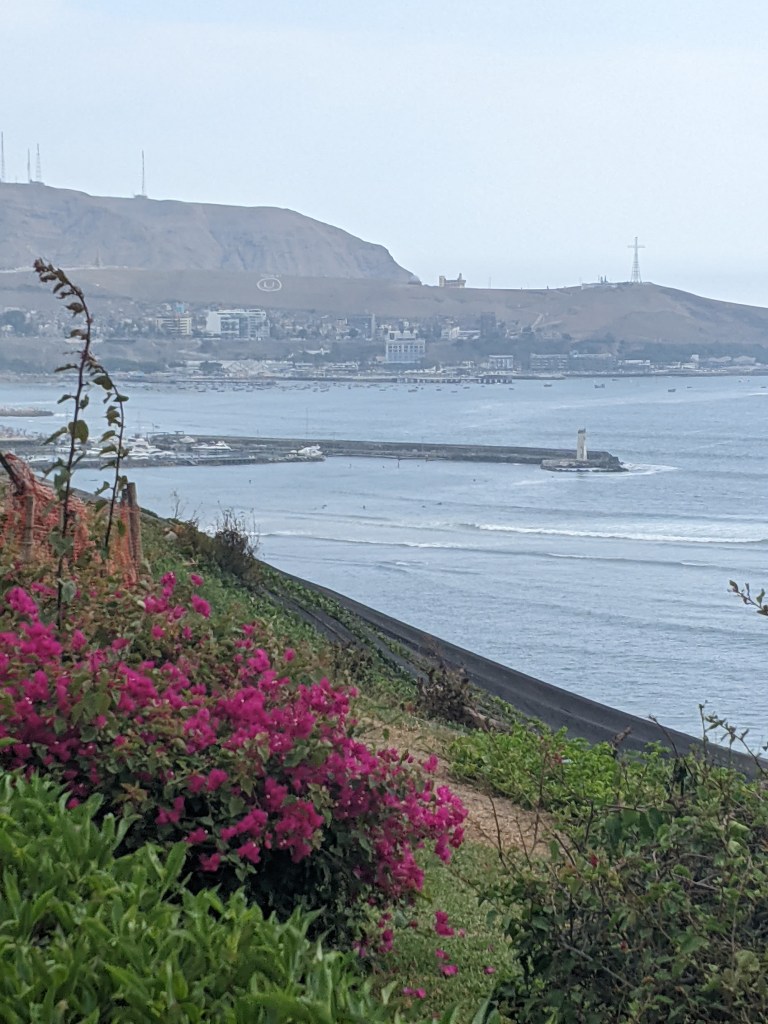
Chorrillos, one of the most southern districts of Lima was oddly reminiscent of the stretch of coast between Godrevy Point and St Ives. Long beaches, old fishing boats bobbing close to shore. The rainbow of beach umbrellas said tropical, but the periodic screams of bathers pummelled by the ferocious shore dump made me feel like I was right at home at the height of summer in Perranporth. I stood and stared out to sea from a mirador. Somewhere out there submerged in the Pacific Ocean was the San Martin. Towards the end of July 1821, so was Trevithick, with his ludicrous homemade diving bell. Trevithick was allegedly the first to recover treasure beneath alongside the local Chorrillanos.
Aquatic Archaeology
Many years later another man by the name of Jorge Alvarez von Maack was given all the credit. A diver by trade, he trawled the Peruvian coast for sunken treasure during the 1980s and 90s, and his first mission was to dive down to the San Martin, the most famous of all the boats off the coast and a vital symbol of the independence movement.
Looking at photos of the man, if you took von Maack out of Peru and placed him in a small tavern in 19th century Penzance and he wouldn’t have looked amiss. Pale face, flat cap and the knitwear worn by fishermen the world over. All he needed was a glass of ale and a Cornish accent thicker than his jumper and he would be transformed into George Mack. I write this like I met him in the flesh but unfortunately I didn’t. I sent him a few messages and inevitably given my luck he didn’t reply. Just before I sent another slightly more direct message I found out why: Jorge Alvarez von Maack is dead.
Spending a Friday morning looking for a man who is dead is quite disheartening, especially when it’s not on purpose. I’ve spent most of my time looking for dead people; ones I knew were dead, ones I knew were dead but didn’t know where they were buried; and some completely by accident while looking for people from which to gleam knowledge. The only (other) man to have sunk beneath the surface and explored the riches was alongside Trevithick beyond the horizon of life. What else lurked beneath the surface just off the coast at Chorrillos? With no one left to ask, I would have to find out for myself.
I’m not much of a mariner, less so a diver, but luckily I knew the right people to ask in Lima, an American living in the city with his diving qualifications and a large group of surfers who know everyone, from drug lords and whores to taxi drivers and local fishermen with boats for hire. I was tempted to go in search of the wreck myself, but instead I began on the shore, in the archive of the Instituto Riva-Aguero in the centre of Lima, which was now finally open. The world’s worst historian jittered into action once more; leaving my hostel in the morning and arriving at the wrong place, much to the confusion of the security guard. He gave me the actual address, not far but very in keeping with my tenuous grasp on the quest I am undertaking. I held even less hope for myself when I tried to follow the new security guard into her office thinking it was the archive. Reality isn’t for me.
I had come to view all the documents that von Maack had prepared before embarking on the first aquatic archaeology mission. If there was no mention of Trevithick, at least I would have more information about the ship itself, allegedly a Russian frigate bought by the Chilean government and repurposed as a war ship. Immediately I found this info to be wrong; it wasn’t a Russian ship, it was built by a British company, Dudman, in 1802, East Indiaman class. Before being sold to the Chileans in May 1818, it had previously sailed east to Bombay, Madras and all the way to China under the name ‘Cumberland.’ When bought by Chile it was renamed in honour of the second most famous Latin liberator: Jose de San Martin.
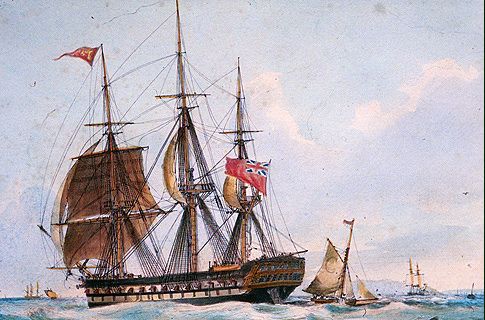
As the story goes, the San Martin had a great deal of valuable cargo on board, not counting the 60 cannons. Trevithick is said to have rescued the copper and bronze aboard, but according to these reports the cargo wasn’t as precious nor as vital: initially all that is said to be aboard is a large shipment of wheat.
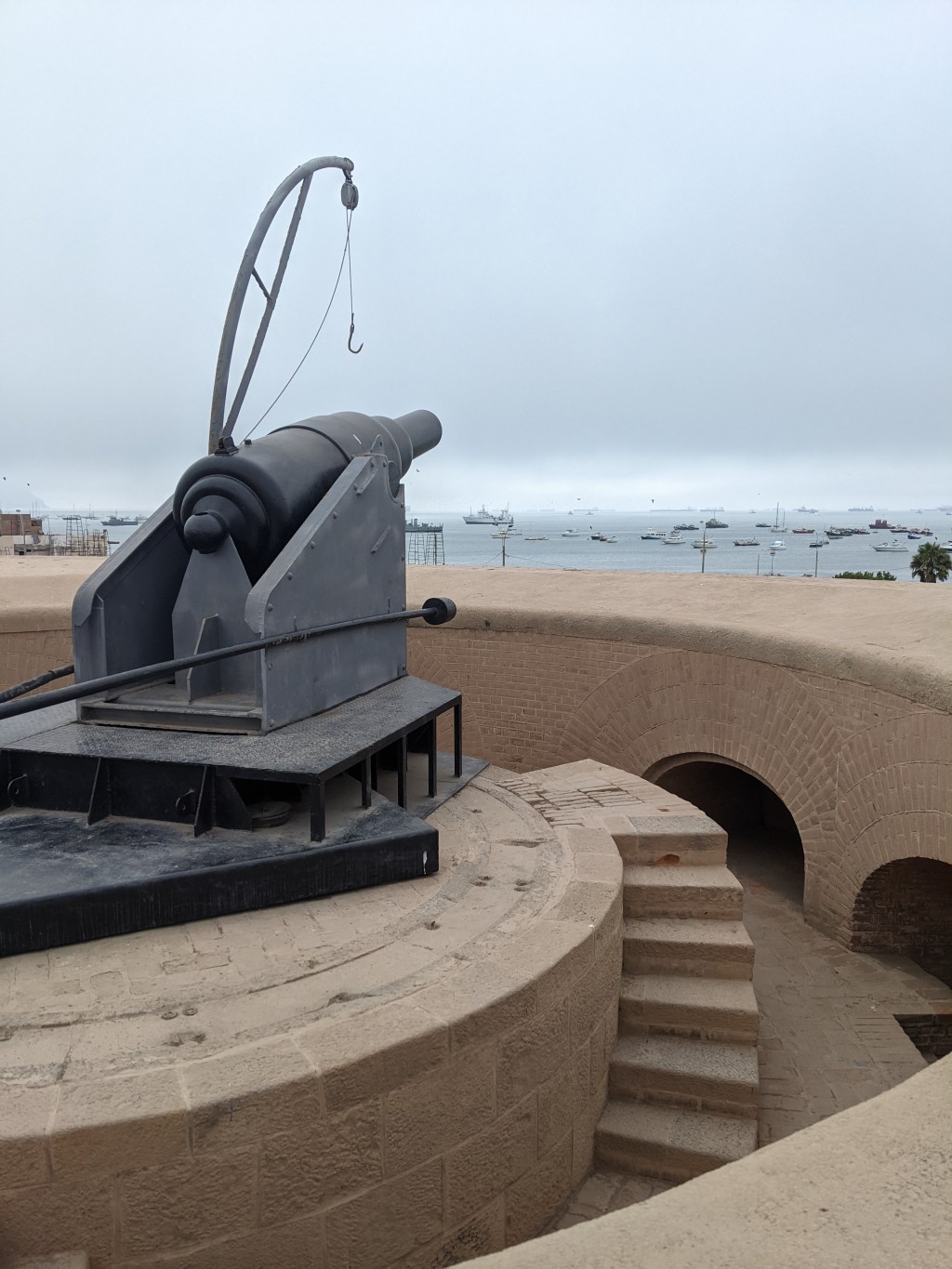
While the tide was turning in favour of the Republicans and patriots, the war was not yet won and the main port of Lima, Callao, was still a tetchy place. Chorrillos, further south was briefly used as the principal port to avoid the batteries of the Fortaleza San Felipe that still stands strong in Callao today. Given that Callao was too dangerous, this cargo of ‘wheat’ was to be unloaded at the much smaller dock at Chorrillos. One immediately begins to suspect that there is something a whole lot more valuable aboard the San Martin; a war ship with full crew of 350-400 and Cochrane’s right-hand man William Wilkinson at the helm for a simple commercial mission seems downright suspicious. What other treasures were hidden below deck?

Whatever it was, it never made it ashore. Freak winds and heavy seas just a kilometre or so off the coast flooded the deck beyond rescue and the entire crew abandoned ship. Everyone survived, but all 60 cannons, the shipment of ‘wheat’ and all the other goodies sunk 20 feet to the ocean floor. Hearing of ‘innumerable delights’ beneath the deck, the locals of Chorrillos armed only with canoes, paddled out and somehow managed to save whatever they could from the freshly sunken ship. Please forgive my subpar translation from the original Spanish documents:
“…thus began work to save all that could be useful, all from the bottom of the sea. The Chorrillanos extracted without diving suits, the cannons, supplies and ammunition…”
German Stiglich.
Not the wheat I suspect; bit soggy by now. The locals did what they could but something doesn’t add up once more. How did locals armed only with canoes, refloat an immense number of cannons made of iron and bronze? There is an enormous Trevithick sized hole in this story. Only someone of his ingenuity could have raised these hefty cannons from the seabed, someone who had previously attempted a similar task. Trevithick had done exactly that in 1810 at Margate, Kent. Using hollow iron tanks placed under the wreck then rapidly inflated, the tanks shoot to the surface along with the wreck. Being scientifically illiterate, I have no idea how this is possible, nor how and who dived down to fasten the tanks to the wreck, but apparently it happened!
The original story of Trevithick’s efforts, the vague one that made it’s way back across the Atlantic with the big man, mentions only one cannon and an amount of copper and bronze that he was allowed to keep for his work, worth an estimated £2500 (£219,000). He then used the proceeds to buy his fabled brigantine and sail north, eventually reaching Costa Rica. This story and von Maack’s report do not line up, with both parties missing information either by accident or on purpose. Why von Maack never mentioned Trevithick is curious, but given the symbolic nature of the San Martin, his project was a distinctly patriotic one. Perhaps he didn’t mention Trevithick because it undermined the Peruvian cooperation, or perhaps because the locals resented him for taking the treasures for himself. Either way, there is no mention of Trevithick but there is a gaping hole in the ‘official’ story that perfectly fits a 6’2 Cornishman who couldn’t speak Spanish within.
So in Peru’s history, von Maack and his associate Pedro Martinez Aguilar were the first and only men to dive down to the San Martin and rescue whatever lay beneath the deck. What Trevithick salvaged was just a small selection of the goods on board. The wreck itself was a mere shell by the time of his dive 1982; 161 years of strong currents and salty water had worn away the wood. It took another 8 years to identify the name of the ship but:
“during the explorations, we found immense amounts of bronze, copper and innumerable cannons of different calibre (iron and bronze), cannonballs and huge pieces of iron”
Jorge Alvarez von Maack
So maybe Trevithick did salvage some of this bronze and copper? Also on board, the treasures looted by William Miller during the campaigns of the south in Pisco and Arica early in the year 1821. No longer just wheat…
The Invisible Inventor
I walked back to Lima’s St Ives, stood on another vista on the cliff and stared out once again out into the bay, trying to imagine whatever was left of the San Martin beneath the surface. I thought back to my morning in the archive; there was indeed a rescue mission soon after the ship sank. Opportunistic plunder or looting by the locals might be a more accurate term for this wholly unofficial endeavour but someone with engineering pedigree helped in some regard. I find it hard to believe that a bunch of people in canoes could rescue any amount of cannons from the bottom of the ocean without equipment. All they could realistically have salvaged whatever they could carry.
There is no mention of Trevithick, nor any other gigantic mute foreigner who built his own diving bell to undertake his own salvage mission. Credit or no credit, someone utilised ingenious methods to rescue a cannon or two from the wreck and since he was no longer in Cerro de Pasco, there was a bored Cornishman lurking around Lima with little to do.
Even when confronted with Trevithick’s antics, he still doesn’t appear to me. No name, no description, just a large hole where he could have been, should have been and almost definitely was 202 years ago, but any attempt any confirming this officially is impossible.
The search for any mere morsel, just the vaguest mention of the big man in Peru continues!
 JOEL GRIFFETT
Leave a comment