Pre-order ‘Long Road to Nowhere: The Lost Years of Richard Trevithick (Part One)’ now, HERE.
As if the Trevithick Trail wasn’t already vague enough in Peru, a country he spent at least 5 years in, traces of his departure are even more faint.
Whatever he told his son Francis, he corroborated with a report written about his travels after he returned. Here he introduces to the world the most fascinating and hard to prove rumour of his time in Latin America: his encounters with the great liberator Simon Bolivar.
He had no reason to lie, but all the reason to exaggerate given that he returned home penniless and half-starved. An overlap is possible, but as yet unconfirmed as I keep digging through endless sources to piece together this, one of the hardest jigsaws in the world. No one knows when Trevithick left Peru, but Bolivar arrived into Lima on the 1st September 1823, so any liaison between the two happened after this date.
In lieu of the truth, I will once more repeat the legend, as told by the man himself
Even Bolivar’s arrival at Lima made it still worse, for he forced me into the army, with my property, which is not paid to this day, to the amount of $20,000…disgusted as I was with what I had seen and suffered in Peru, I determined on quitting it for a time at least, and on visiting Colombia. I immediately proceeded thither [Costa Rica] instead of going to Bogota to carry Bolivar’s orders into execution
Richard Trevithick’s post-adventure report (in: Life of Richard Trevithick, 1872)
Here is Francis’ account, one he padded out using his own imagination?
Bolivar’s cavalry were short of fire-arms. Trevithick invented and made a carbine with a short barrel of large bore, having a hollow frame-work stock. The whole was cast of brass, stock and barrel in one piece, with the necessary recess for the lock; the bullet was a flat piece of lead, cut into four quarters, held in their places in a cartridge until fired, when they spread, inflicting jagged wounds. He was obliged to serve in the army, and to prove the efficiency of his own gun. He was never a good shot, nor particularly fond of shooting; and, after a long time, Bolivar allowed him to return to his engineering and mining
Trevithick left Lima about 1821 or 1822, for Bogota, in Colombia, on a special mission for Bolivar.
Francis Trevithick, Life of Richard Trevithick
The last sentence alone is enough to disregard everything Francis wrote, about his father (in South America, at least). It is also what led me to follow his trail in the first place. A simple internet search told me when Bolivar arrived in Lima, years after Trevithick had left Peru, according to Francis. When I reached out to those who I thought might have some knowledge of this, they didn’t reply, which led me to believe that I’d uncovered some kind of conspiracy. An anecdotal and probably inconsequential conspiracy, but a conspiracy nonetheless. When I began to think this was untrue everything unravelled, until I changed how I was looking at it. I asked myself who is wrong: Richard or Francis? The man who lived to tell the tales, or his son who misremembered it all 40 years later?
Again, all the uncertainty is what led me out here, in search of nothing particular. I love a challenge and this is a fantastic one. Pure speculation and guesswork are a writer’s dream but a historian’s nightmare. I flit between writer and historian on a daily basis as they each tussle for my attention.
How to sail to Bogota
One thing is easy to dismiss. Trevithick says Bogota was his destination, but he’d have a hard time getting there since he was in a boat. There is one way of sailing just within reach of Bogota, but it is a journey so ridiculous not even Trevithick would dare undertake it.
Never one for geography, he went wrong immediately. If you were to sail from Callao to Bogota, you would have to go all the way down south past Cape Horn, up the Atlantic side of the entire South American continent until you reached the Caribbean and the mouth of the Magdalena river near Barranquilla. From there, sailing almost the entire length of the second most mystical river in Latin America, you could get about 20 or 30km west of Colombia’s capital and make the rest of the journey on foot or horseback. Either the ‘secret mission’ for Bolivar was flagrantly false, or Trevithick realised immediately after setting off from Callao or Chorrillos that Bolivar had set him an insurmountable challenge that was little more than a prank to get rid of him.
He never made it to Bogota, but I did – by air once more. Travelling almost 4000 miles by foot and road in Chile and Bolivia had left me somewhat weary of hitchhiking and night buses. The extended 4 month zigzag through deserts and mountains further south meant it wise to indulge in a plane ticket rather than work my way up from Lima to Bogota by road once more – I’d surely get distracted by something along the way. Plus, much of southern Ecuador was underwater at the time, so the lure of cheap flights on Wingo, Latin America’s Ryanair was powerful.
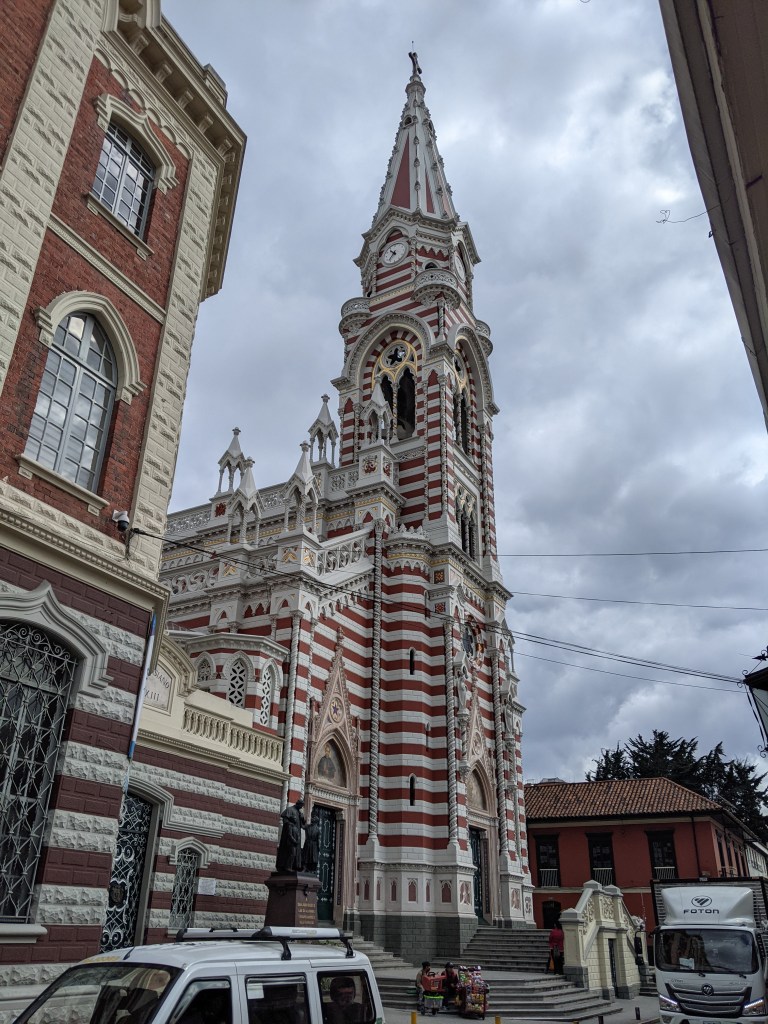
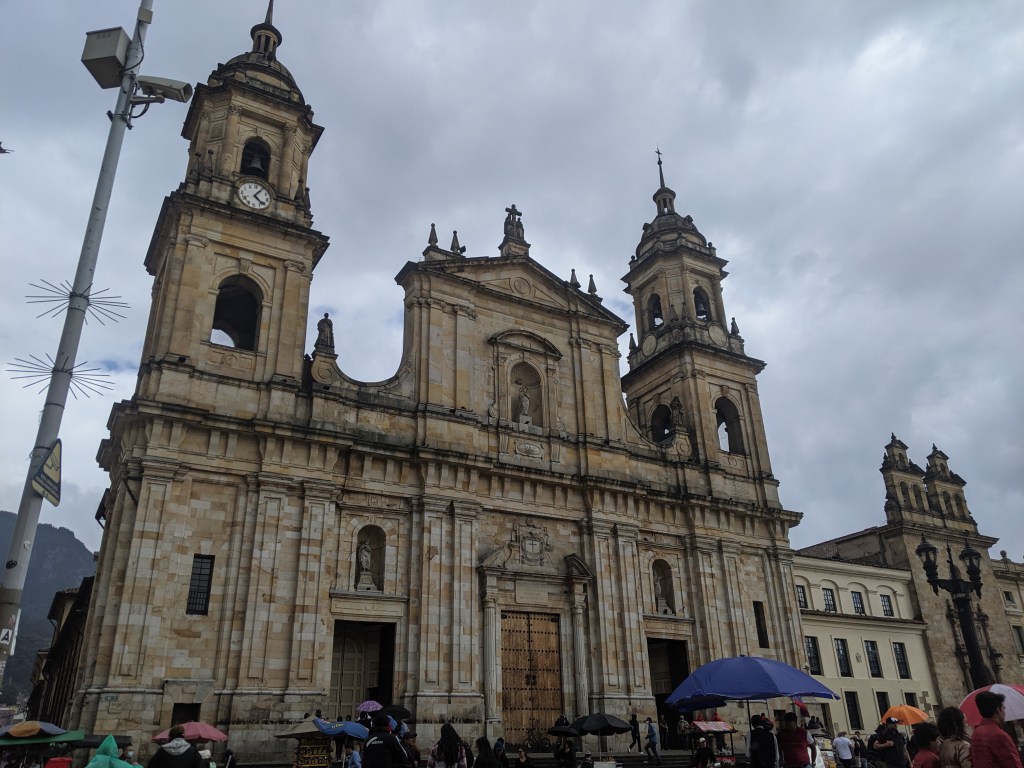
Apprehension swarmed me as I arrived at the appropriately named El Dorado international airport; all I’d been given was stern warnings about Colombia’s capital city. Don’t go outside after dark; don’t go into this and that neighbourhood; don’t go altogether – change your flight. None of this filled me with hope, but despite a healthy dose of sketchiness being more than apparent (the amount of throat and face tattoos were enough to unsettle me) the dread mostly subsided. It was almost disappointing; I wasn’t even subject to the same harassment by “taxi drivers” outside the airport, all vying to rip me off. After a few uneventful days in and around the La Candelaria district, I was surprised to escape with my life intact as I made my way into the countryside and the small town of Guatavita and the Lagoon of the same name, nestled away in the foothills beyond the town, home of the El Dorado myth.
Leaving Bogota I was confused for a moment; red bricks and mock Tudor facades sped past. It made me feel like I was back in England until we climbed out of the city and into the lush green hills shrouded by low cloud.
Dreaming of El Dorado
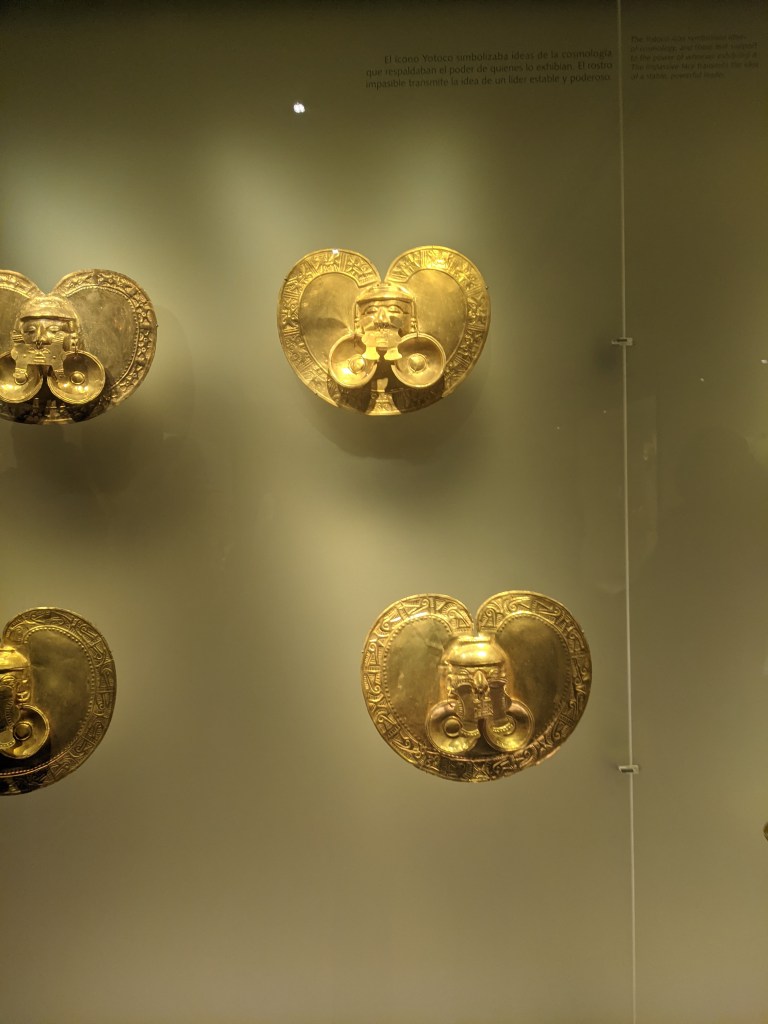
It’s only right that while I follow Richard Trevithick’s wayward trail towards infinite riches, I briefly touch upon El Dorado with yet another detour to the very heart of the myth’s origins.
When Trevithick left Peru sometime before the end of 1823, it is said that he was on his way to Bogota on a secret mission for Simon Bolivar. He may well have met Jose de San Martin, but in the brief crossover period where Trevithick and Bolivar were both in Peru, it’s still hard to tell if their paths actually crossed, let alone if they were well acquainted. Nothing more is ever mentioned of the secret mission; a mission so confidential he hadn’t been told the details, given to him by a man he’d never met. Hyperactive as always, Trevithick abandoned Colombia for Costa Rica and the brand new discovery of gold there, instead of the ancient legend of the Muisca people and their fabled golden man.
His destination remains a mystery: Bogota? Laguna de Guatavita? The mining district of Santa Ana? He got as far as the port of Guayaquil in Ecuador before conveniently forgetting about Bolivar and leaving the continent.
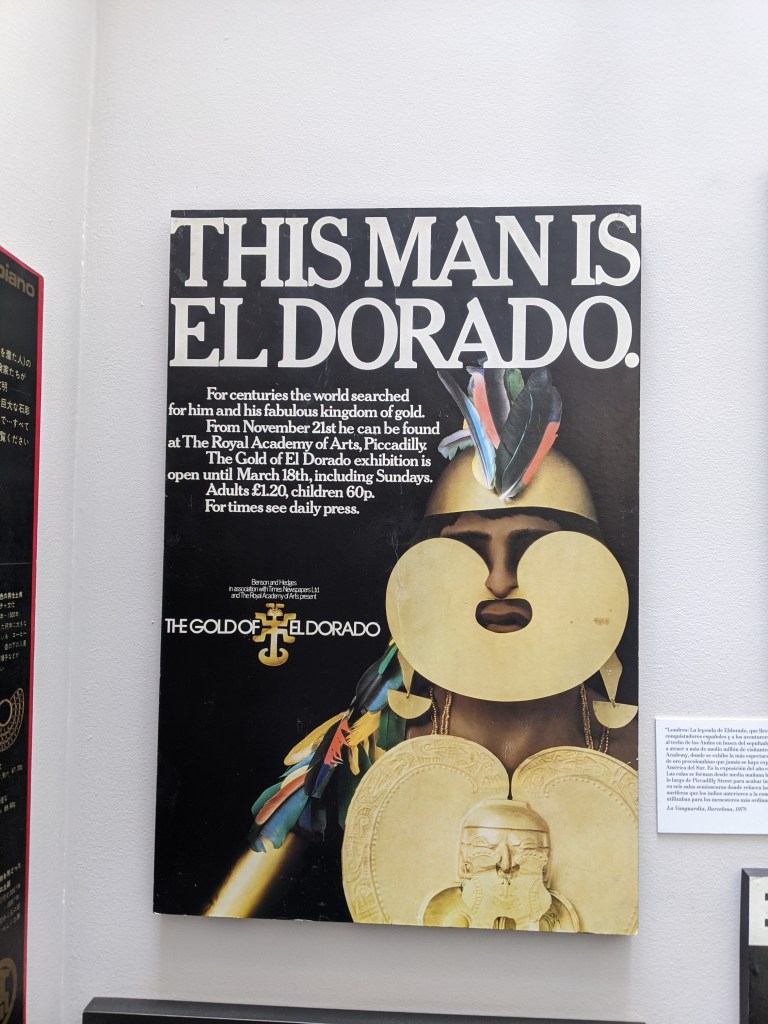
One night before he left Peru, maybe in 1823, Trevithick thrashed and writhed in his bed, unsatisfied with his progress so far and frustrated by so many factors, all beyond his control. He’d chosen the wrong country; it wasn’t until the end of 1826 that the last conquistadors were sent back across the Atlantic with the fall of the San Felipe fortress at Callao. Sweaty but still in the hot Lima night, he finally fell asleep and dreamt of his true calling. The glowing figure of Simon Bolivar emerged from the haze on horseback, brandishing his famous sword, now adorned, like himself and his steed, in the finest golden wares ever known:
“The riches you desire, Don Ricardo, are no longer here in Peru. You must instead go to Colombia and find what you truly deserve. Remember, what you seek is also seeking you; head first to Bogota and you will find the one who can lead you to what is yours.”
The figure faded fast, but his voice, barely above a whisper still echoed through Trevithick’s mind as he woke with a stir. He repeated it to himself over and over, and in the morning he was gone.
“There beneath your fortune lays
Inside the crater, retrieve your fate”
 JOEL GRIFFETT
Leave a comment