Pre-order ‘Long Road to Nowhere: The Lost Years of Richard Trevithick (Part One)’ now, HERE.
The copper of Chile was never actually touched by the hands of Trevithick – an assumption I have made owing to the complete lack of proof that he was in the country at any point. His name is not mentioned, not even in passing, by any of the other Brits who passed through Chile in the period between the decisive battle for independence at Maipu in April 1818 and the appearance of the Monroe Doctrine of 1823. How the name Trevithick came to be known at Valparaiso or Copiapó must be down to the fellow Cornishmen who followed his early footsteps decades later.
By 1832 Trevithick was back in Britain and approaching death in circumstances that did not befit his unerring potential for greatness. Wealth and eventually life both left him behind. Had he waited around a few years longer, however, the prospect of silver might have enticed him south into the Atacama Desert.
***
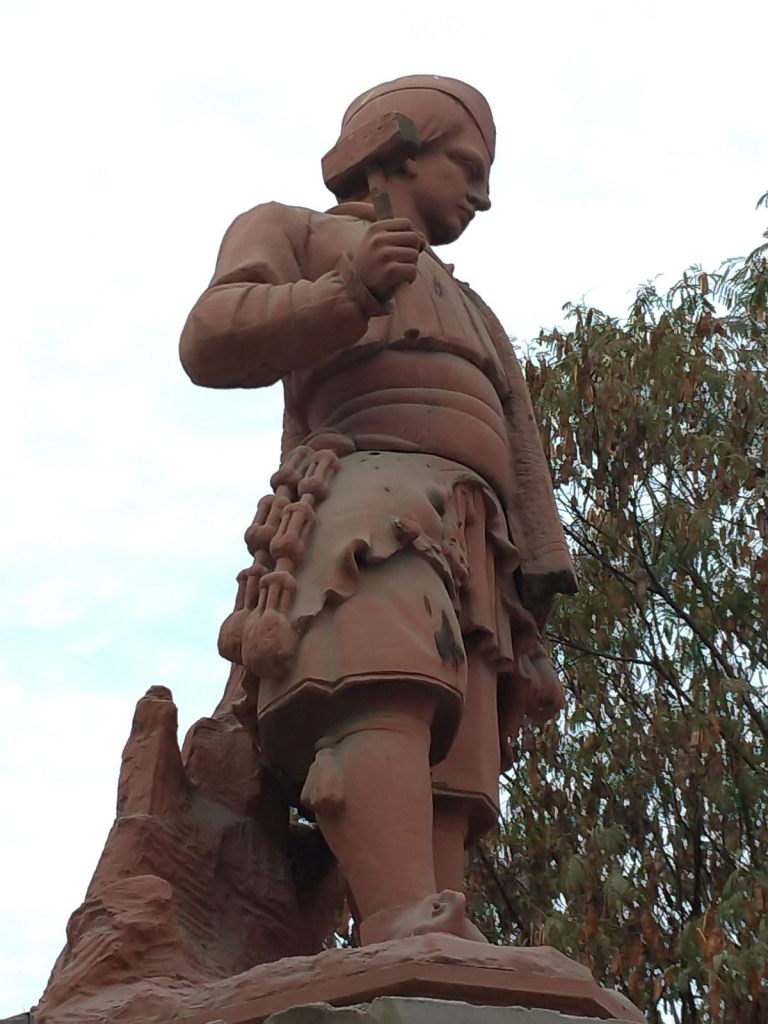
Back near Copiapó, at the southern edge of the Atacama, a man named Juan Godoy would suffer a similar fate. He lacked the inventive prowess and general brilliance of Trevithick but made an important discovery nonetheless, the aftermath of which he did not handle well. Godoy and Trevithick both found the idea of wealth enticing but nigh on impossible to grasp, so when a fortune finally passed their way it slipped out of their fingers as quick as it came. Both died impoverished and far from home, perhaps regretting the mistakes that led them into these sullen corners.
One evening in 1832, Godoy discovered the first deposits of silver in Chile completely by accident. While out hunting for guanacos, a wild animal closely related to the domesticated llama that is valued for its rich wool, he came across a rocky outcrop. As the light began to fade he spotted something, not the guanaco he was hoping for perched atop the rock, but a glowing light emanating from behind the outcrop. The light was otherworldly, like nothing he had seen before. He crept around the edge until he could see whatever lurked beyond.
There before him was the magnificent Alicanto, a phoenix-like bird that only appeared at nightfall in the desert. Its feathers were almost metallic with a shimmering golden hue; its eyes emitted strange and mesmeric lights. Juan hid just out of sight of the Alicanto, ensuring not to spook it. He put one hand on the rifle strapped to his back before stopping himself immediately – this was not an animal a good man would kill. He had heard stories about the Alicanto from fellow miners – that the bird appeared once the sun had set in order to lead the deserving miner towards hidden treasure.
Juan stayed crouched behind the rock. The bird moved slowly, as if wounded. It sensed the presence of a mortal nearby and spun round, spreading its magnificent wings wide as if ready to take to the skies. But the Alicanto could not take flight; it had gorged itself on silver ore that left it chained to the earth. Instead, it began to skip across the desert floor. Juan watched it go and then, with suitable distance between them, followed suit.
He had to be careful – the Alicanto was a volatile creature. Any kind of disturbance and it would disappear into the night. He also knew the danger that could befall him at any moment. The Alicanto can see directly into a man’s soul. It can tell apart the avaricious busceador (prospector) from an honest, hard-working man without letting them know. Both follow along behind in anticipation of their fate and both receive what they deserve.
Juan was apprehensive. One of his closest friends, a miner too, had disappeared into the desert long ago, never to be found. The other miners said he was a greedy man with a bad heart, and thus that night he went out and never came home, the rumours spread that he had seen the Alicanto. The bird had led him deeper into the desert. So blinded was he by greed that he didn’t notice he was being led to his death. Scrambling up the rocks he went, off the precipice he fell.
Juan stood now at the precipice, lingering slightly. The Alicanto was far below him, ushering him down. Juan knew in his heart that he wasn’t being led to his death. Before him was treasure hidden beneath the surface of the earth. The bird had disappeared, back to one of the small caves they rested inside – he was all alone once more, this time surrounded by silver.

***
While Juan Godoy was a good man, he was not a wise one. The mine quickly became known as ‘La Descubridora’ as word spread. Soon a man named Miguel Gallo, former mayor of Copiapó owing to his father’s power and connections, became involved in proceedings. Barely a week went by before he had taken full control of the discovery. Juan had sold his shares to Gallo for a pitiful sum, even for a poor man like himself. What may have seemed like a small fortune at the time was mere pennies in comparison to the future profits of the mine and no one knows how or why he gave up his rights to the discovery so quickly.
The rich and powerful Gallo could easily have threatened and manipulated Juan into relinquishing his claims, eventually offering him a pittance in return for his endeavours, one that only a poor and uneducated man would accept. Gallo all the while had his eye on the long-term profits from which he became supremely rich.
Juan quickly fettered away his own personal fortune and was forced to return to Gallo cap in hand asking for a job. He was given a job in the mine that he discovered, working hard to save another sum of money he thought was impressive but again, paled into insignificance compared with what could have been. Gallo the millionaire watched Juan squander another fortune and just 10 years after discovering silver in Chile, he died penniless by the coast at La Serena a few hours south of Copiapó.
His legacy was eventually preserved. The settlement by the mine was named after him a few years after he died; a statute of him stands proud in the city of Copiapó and the mineral ‘juangodoyite’ was named after him, but all of this came too late for the family he left behind.
Just like Trevithick, Godoy wasted the money he acquired and died in abject poverty that ill befitted his discovery. Neither spared enough thought for their families and Godoy may well have spent his money on drink – a curse that afflicts too many of the men who engage in this foul subterranean labour.


 JOEL GRIFFETT
Leave a reply to Nick Pozzo Cancel reply